Materials that commonly prompt testing in older basements
- Material
- Square resilient floor tile (often 9 by 9 inches)
- Where you find it
- Under carpet or laminate on the basement slab
- Why it matters in a water job
- Wet flooring removal can break and grind the tiles
- Material
- Black or dark adhesive (mastic)
- Where you find it
- Under old tile or left on concrete
- Why it matters in a water job
- Scraping or grinding it releases material
- Material
- Pipe and boiler insulation
- Where you find it
- On old steam or hot-water heating lines, often overhead
- Why it matters in a water job
- Wet wrap can sag and fall; drying fans can spread debris
- Material
- Textured wall or ceiling coatings
- Where you find it
- Older plaster finishes and some ceiling textures
- Why it matters in a water job
- Flood cuts and demolition disturb them
- Material
- Old duct tape or duct wrap
- Where you find it
- On older furnace ductwork
- Why it matters in a water job
- Disturbed when ducts are cleaned or removed
Appearance alone cannot tell you whether a material contains asbestos. Only lab analysis of a sample can.
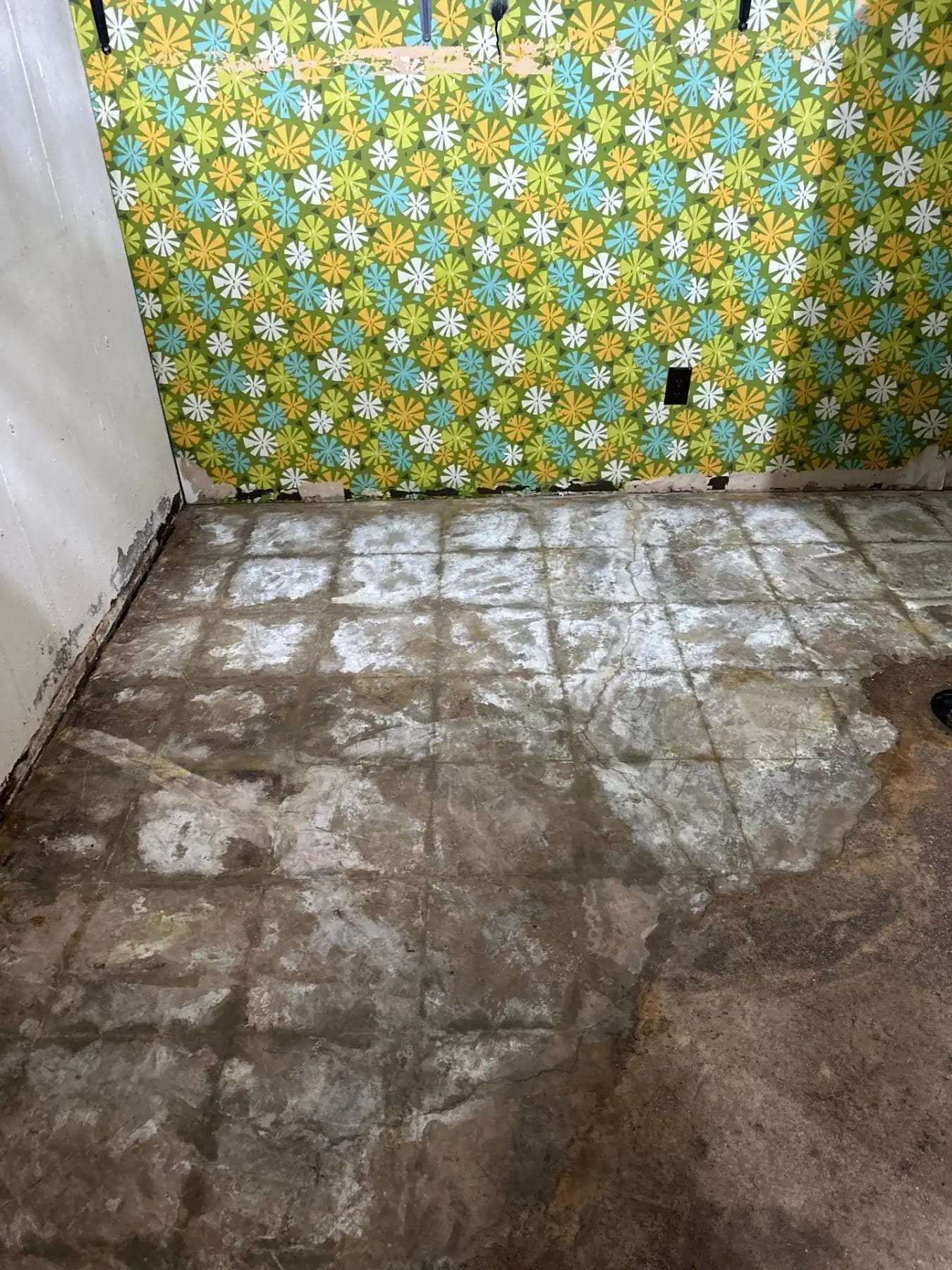
Wet concrete floor with the tile removed in a room with floral wallpaper. A representative photo of the task, not a record of work at any particular property.
Why testing comes before tear-out
Asbestos was used in many building products through much of the twentieth century. In a house from the 1920s, the original materials may predate its common use, but remodels in the 1940s through the 1970s often added resilient tile, mastic, and pipe insulation that can contain it. Wash Park basements have often been through several of those remodels.
Intact, undisturbed materials are generally considered lower risk. A water damage job is the opposite of undisturbed: wet carpet is torn up, tile is pried off, drywall is cut, and fans blow air across the room. That is why many restorers will pause demolition on suspect materials until they are sampled. In Colorado, regulated asbestos work requires state-certified professionals; check with the Colorado Department of Public Health and Environment (CDPHE) for current rules on inspections and abatement.
Keeping the job moving while samples are tested
Testing does not have to mean leaving the basement wet. Many things can continue around it.
Extract water without disturbing the suspect material
Standing water can usually be removed from the surface of tile without breaking it.
Remove what is clearly not suspect
Carpet and pad lifted carefully from above tile, furniture, and stored items can often be dealt with first. Ask the restorer how they will avoid damaging the tile beneath.
Sample
A certified inspector takes samples from each suspect material and sends them to a lab.
Dry with care
Dehumidification can continue; airflow may be adjusted so fans do not blow across damaged suspect materials.
Follow the results
If results are negative, demolition proceeds normally. If positive, certified abatement personnel handle those materials before restoration work resumes in that area.
Common questions
Will testing hold up my insurance claim?
Usually it adds a short delay. Tell the adjuster early that suspect materials are present and that testing is underway. Ask whether testing and any abatement are part of the covered loss under your policy.
What about lead paint?
Homes built before 1978 may have lead-based paint. Cutting or sanding painted trim and walls can create lead dust. Ask any contractor how they handle lead-safe work practices in an older house.
General information for Washington Park, not a quote or professional advice. In an emergency, call 911.