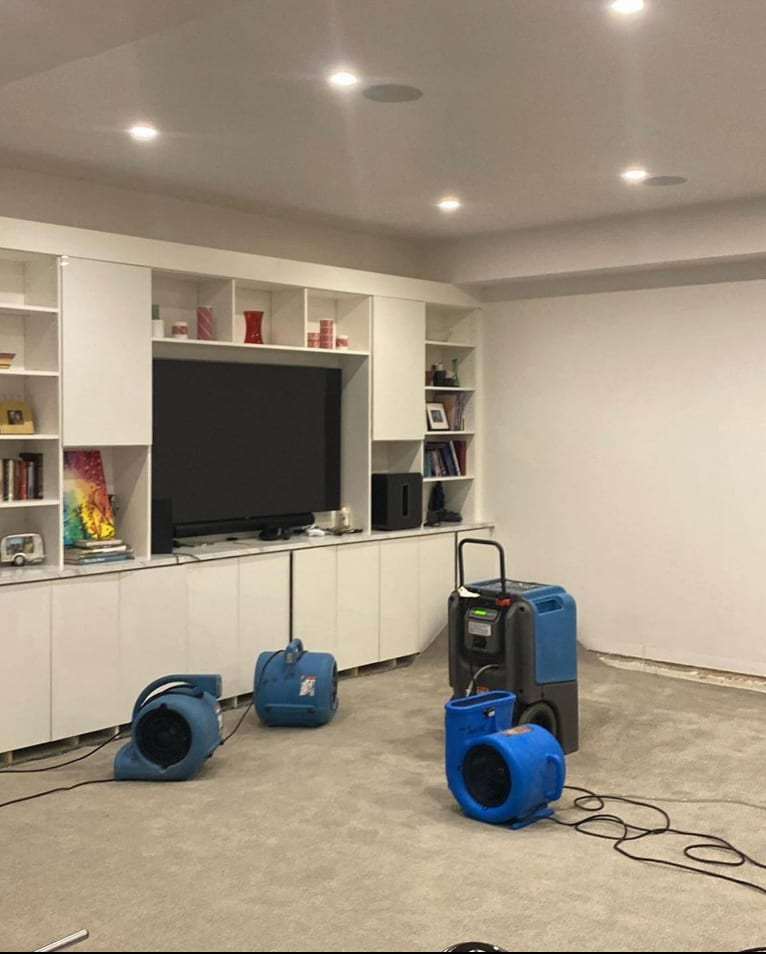
Living room carpet drying with air movers and a dehumidifier. A general example of this kind of work, not a photo of a particular home, business or job.
The situation
Illustrative example. Not a real job or customer.
In an older brick house near the park, a tank water heater begins leaking from the bottom overnight. By morning, water has spread from the utility corner into an adjoining carpeted rec room. The owners shut off the water to the heater and turn off its gas valve per the instructions on the tank, then call a plumber and a restorer.
- The restorer extracts standing water and starts lifting the carpet to remove the soaked pad.
- Under the pad, the floor is covered in small square tiles with dark adhesive visible at broken edges near the wall.
- The restorer stops lifting near the tile, explains that tile and mastic of this type and era can contain asbestos, and recommends sampling before any more floor work.
- The carpet and pad are cut and removed carefully from above without prying up tile, and dehumidifiers are set up to keep drying the room.
- A state-certified inspector takes samples of the tile and adhesive and sends them to a lab.
- Results come back positive for the adhesive. The owners hire a certified abatement contractor to remove the tile and mastic in the affected area before restoration and rebuild resume.
The schedule stretched by several days and the owners had a separate abatement step to arrange, but nobody broke up tile or scraped mastic while it was untested. The owners asked their insurer how testing and abatement related to the covered water loss, and they kept the lab report with their house records.
How the days unfolded
- Day 1 morning
- Leak discovered, water and gas to the heater shut off, plumber and restorer called.
- Day 1 afternoon
- Water extracted, carpet and pad removed from above, tile found, drying equipment started.
- Day 2
- Samples taken by a certified inspector; plumber replaces the water heater.
- A few days later
- Lab results return; abatement contractor scheduled.
- After abatement
- Restorer confirms the slab and walls are dry and rebuild begins.
Takeaways for owners of older basements
- If you do not know what is under your basement carpet, find out from records or a past remodel before a leak forces it.
- Do not pry up old tile or scrape adhesive yourself to see what it is.
- Ask any restorer how they handle suspect flooring before they start lifting carpet.
- Expect testing to add some time, and plan the household around it.
- Check the age on your water heater label; tanks near the end of their typical service life are worth replacing on your schedule.
Common questions
Could the drying have stopped while waiting for results?
In this example it did not need to. Dehumidification continued, and fans were positioned so they did not blow across broken tile edges. Ask the restorer how they balance drying with avoiding disturbance.
General information for Washington Park, not a quote or professional advice. In an emergency, call 911.