Old foundations breathe, and sometimes they drip
Foundations built in the early twentieth century were often laid in soft lime mortar, with brick or rubble stone below grade and little more than a coat of tar or parging on the outside. Those walls let moisture pass through slowly, and for most of their life that was fine, because the basement held a coal bin and a furnace rather than a carpeted bedroom.
Seepage is the gradual movement of water through the wall when the soil outside is wet. It tends to appear as dark damp patches, a line of moisture at the base of the wall, flaking paint, or a white powdery crust called efflorescence, which is mineral salt left behind as water evaporates. In a finished basement, the first sign may be a musty smell or a swollen baseboard rather than visible water.
Because seepage builds slowly, insurers commonly treat it differently from a sudden pipe or appliance leak. Many policies exclude groundwater and long-term seepage. That makes the cause important: a burst line behind the wall is a different conversation from rainwater moving through masonry.
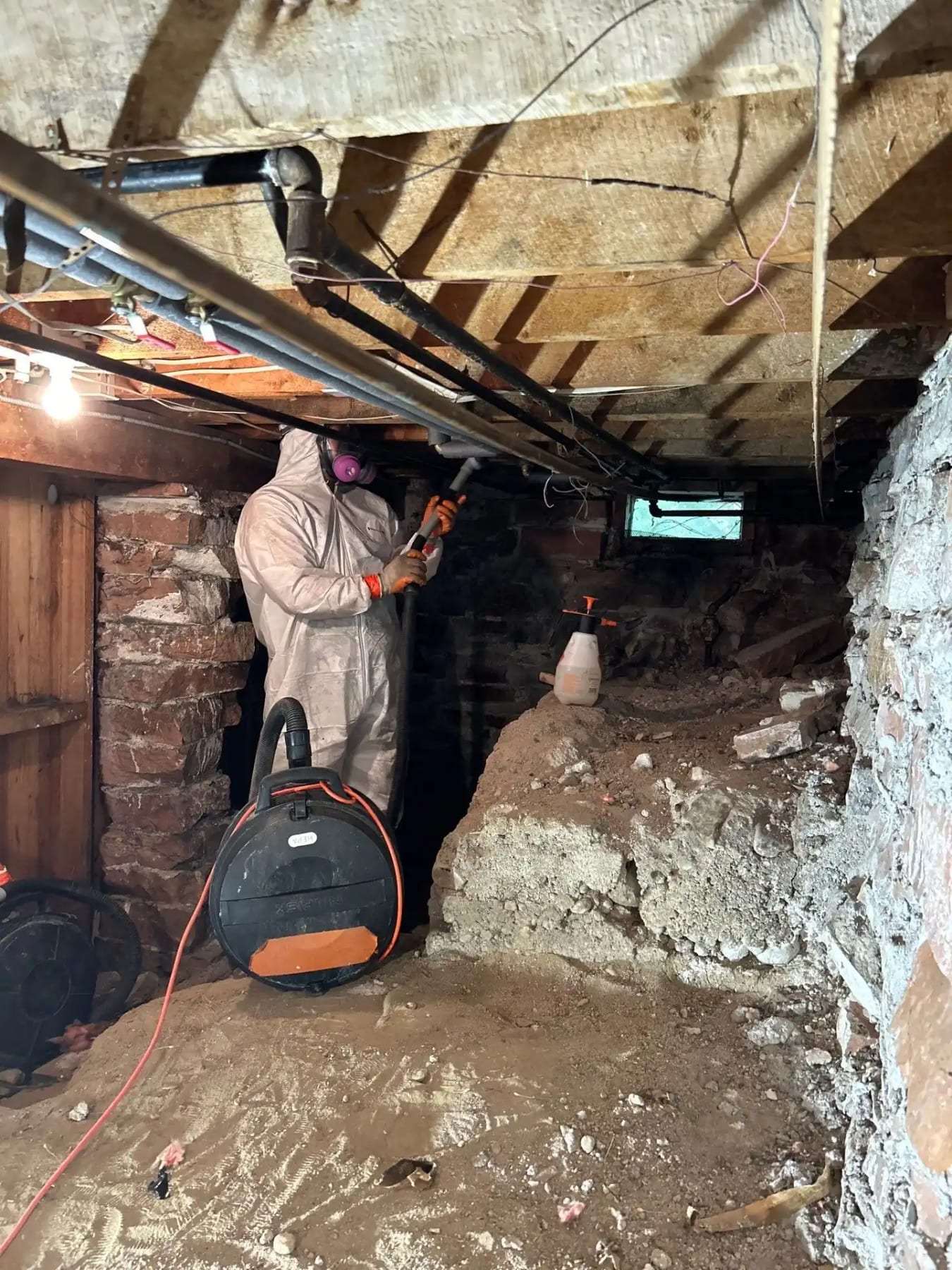
Technician with an air scrubber in a basement with stone foundation walls. A general example of this kind of work, not a photo of a particular home, business or job.
Reading the signs on the wall
- What you see
- White, powdery crust
- Likely meaning
- Water has been passing through and evaporating for some time
- Next step
- Brush off and watch whether it returns after wet weather
- What you see
- Damp band at the floor joint
- Likely meaning
- Water entering where wall meets slab, often after rain
- Next step
- Check grading, downspouts and gutters on that side
- What you see
- Wet patch at one spot
- Likely meaning
- A crack, failed mortar joint, or a pipe penetration
- Next step
- Inspect from outside at the same location
- What you see
- Water only after irrigation
- Likely meaning
- Sprinklers soaking soil next to the wall
- Next step
- Adjust heads and zones away from the foundation
- What you see
- Dampness all over in summer
- Likely meaning
- Condensation on cool walls rather than seepage
- Next step
- Use a dehumidifier and compare readings
Matching the fix to the cause
- IfWater collects along one side after stormsStart outside: clean gutters, extend downspouts, and rebuild the grade to slope away.
- IfMortar joints are crumblingAsk a mason experienced with old brick about repointing with a compatible soft mortar; hard modern mortar can damage historic brick.
- IfSeepage continues after drainage fixesGet opinions on interior drain systems or exterior excavation and waterproofing, and how each affects the finished space.
- IfThe wall is finished and smells mustyOpen a test section to check behind it before deciding how much to remove.
- IfCracks are wide, stepped, or the wall is bowingHave a structural engineer look before any waterproofing work.
General information for Washington Park, not a quote or professional advice. In an emergency, call 911.