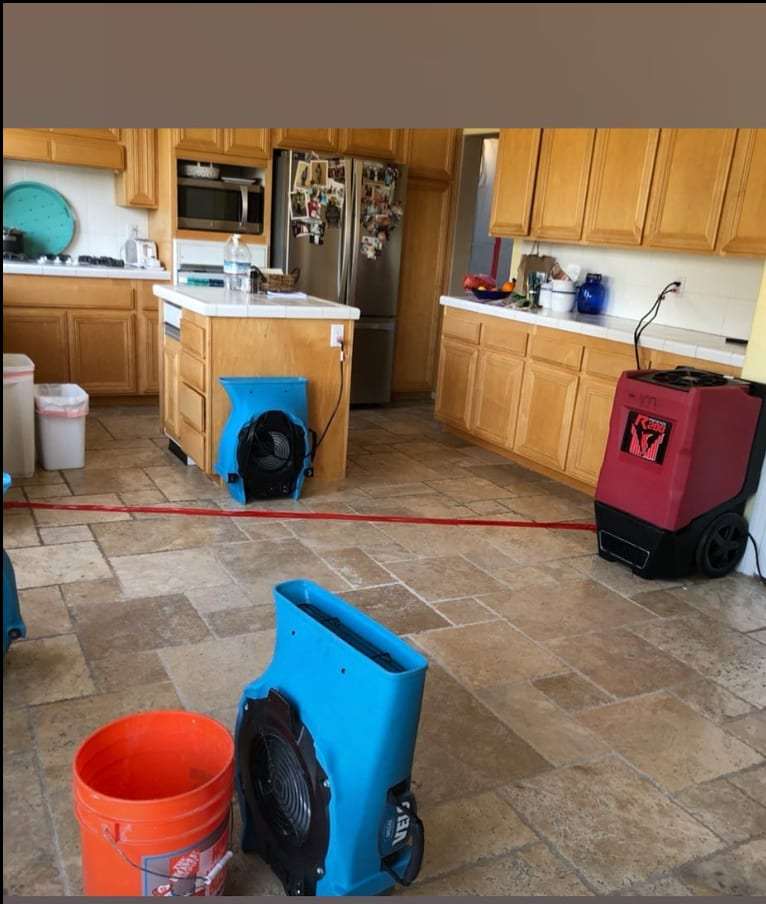
Kitchen water drying setup with air movers and a dehumidifier. Example of the work involved; the photo does not show a specific property or a job for this site.
Why the old utility corner floods the rooms beside it
Before natural gas furnaces, most Denver houses had a coal room where deliveries came down a chute from the side or back of the house. When coal went away, that space became the natural home for a washing machine, a deep laundry tub and the water heater, close to the main drain and the gas line. The rest of the basement was later finished, but the utility corner usually stayed bare concrete.
The problem is the floor. Old slabs were often poured unevenly, patched, or pitched toward a drain that has since been covered or partly blocked. Water from an overflowing tub or burst hose does not always head for the drain; it can flow toward the finished side and slip under the bottom plate of a stud wall, soaking pad and drywall in the family room before anyone notices.
Common triggers are simple: a rubber washer hose that splits, a laundry sink that overflows when the washer pumps into it and the drain is slow, a water heater tank that starts leaking from the bottom, or a condensate line from a high-efficiency furnace that comes loose.
Quick facts for the utility corner
- Washer hoses
- Rubber hoses weaken with age; braided stainless hoses are a common upgrade, though they also wear
- Laundry tub
- A slow tub drain plus a washer discharging into it is a classic overflow
- Water heater
- Tank water heaters do wear out; a pan with a drain line or an alarm gives warning
- Furnace condensate
- High-efficiency furnaces produce water that must drain properly
- Floor drain
- Make sure it is uncovered, clear and actually the low point
A once-a-year utility corner inspection
- Squeeze washer hoses and look for bulges, cracks or rust at the fittings; replace them if in doubt.
- Run the washer and watch the laundry tub drain: water should never rise near the rim.
- Look under the water heater for rust, drips or mineral trails, and read the age on its label.
- Confirm that the furnace condensate line is attached and draining.
- Pour water near the utility corner wall and watch which way it runs.
- Keep boxes and stored items off the floor and away from the wall shared with finished rooms.
- Consider inexpensive water alarms on the floor near the washer, heater and tub.
General information for Washington Park, not a quote or professional advice. In an emergency, call 911.